

The state of EV travel in 2026
Electric road trips used to mean constant math and charger anxiety. By 2026, the experience is much easier, though you still have to think ahead more than you would in a gas car.
Investment in charging infrastructure is the biggest driver of this change. Both public and private sectors are pouring resources into expanding networks, particularly DC fast chargers – the kind that can add significant range in under an hour. We’re also seeing a monumental shift with Tesla opening up its Supercharger network to other EV brands. This access will dramatically increase charging options, especially along major travel corridors.
It’s important to be realistic. Even with improvements, charging still takes longer than filling a gas tank. Planning your route around available chargers, understanding different charging speeds, and factoring in potential wait times will be essential. Range will continue to vary based on vehicle model, driving conditions, and even how heavily you use climate control, but the increasing availability of reliable charging makes long-distance EV travel far more viable.
The days of truly worrying about being stranded are fading. The overall experience is becoming less about if you can make it and more about how you’ll optimize your journey. It’s a transition, and 2026 will be a pivotal year in solidifying electric vehicle travel as a mainstream option.
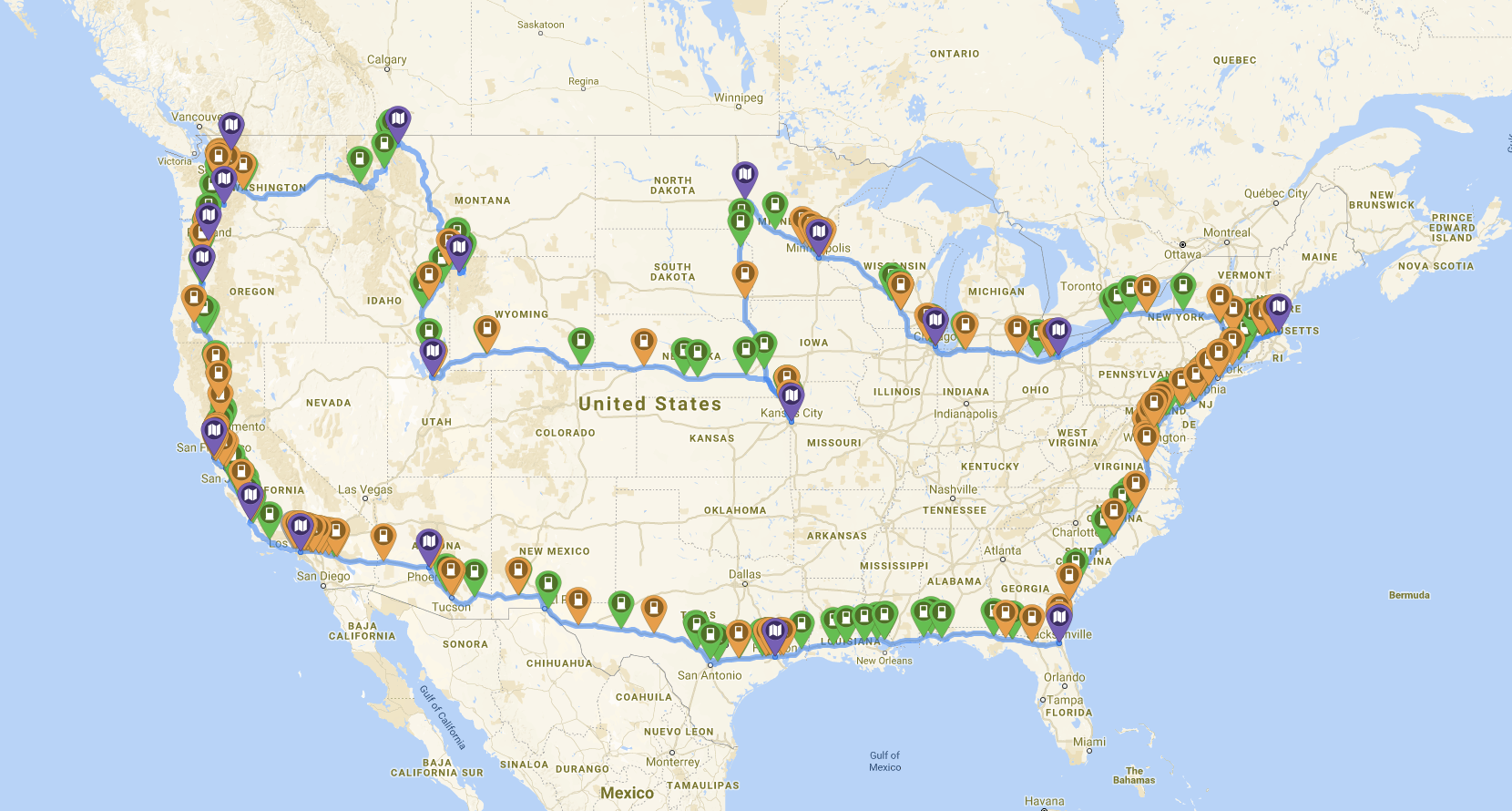
Colorado’s Electric Highways
Colorado has emerged as a leader in EV infrastructure and a fantastic destination for electric vehicle road trips. The state government has actively invested in expanding its charging network, making it one of the most EV-friendly states in the US. According to evco.colorado.gov, Colorado continues to add charging stations to both urban and rural areas, aiming to eliminate range anxiety for drivers.
What sets Colorado apart isn’t just the quantity of chargers, but their strategic placement along some of the state’s most scenic byways. The Peak to Plains Scenic Byway, for example, offers a stunning drive from the foothills of the Rocky Mountains to the Great Plains, and now boasts a growing network of charging stations in towns like Golden and Boulder. This allows for a relaxed exploration without constant range concerns.
The San Juan Skyway, a breathtaking loop through the southwestern mountains, is another route benefiting from increased charging infrastructure. While some sections still require careful planning, the availability of chargers in towns like Ouray and Durango makes tackling this iconic drive in an EV a realistic possibility. Imagine cruising along mountain passes, knowing you can reliably recharge while enjoying the views.
Driving in Colorado with an EV isn't just about reaching a destination; it’s about experiencing the journey. The state’s commitment to sustainability aligns perfectly with the ethos of electric vehicle travel, making it a guilt-free and enjoyable road trip destination. It's a place where you can truly appreciate the beauty of nature while minimizing your environmental impact.
- Peak to Plains Scenic Byway: Connects Golden and Boulder with reliable fast chargers.
- San Juan Skyway: Mountain loop, chargers in Ouray & Durango
- Mount Evans Scenic Byway: High-altitude views, limited but growing charging options
- Trail Ridge Road: Rocky Mountain National Park, chargers in Estes Park
Colorado EV Incentives
- State Tax Credit for EVs - Colorado offers a state tax credit of up to $5,500 for the purchase of a new electric vehicle. The amount varies based on the vehicle’s MSRP.
- State Tax Credit for Used EVs - A tax credit of up to $2,000 is available for the purchase of a used electric vehicle.
- Alternative Fuel Vehicle (AFV) Grant Program - Grants are available to support the purchase of alternative fuel vehicles, including EVs, for state and local government fleets.
- Charge@Home Rebate - Xcel Energy offers rebates for the installation of Level 2 EV chargers at residential locations. Rebate amounts vary based on income.
- Commercial EV Charger Rebates - Xcel Energy also provides rebates for businesses installing EV chargers, supporting workplace and public charging infrastructure.
- Income-Based EV Charging Rebates - Income-qualified customers may be eligible for increased rebates for both EV purchases and charger installations through various programs.
- Vehicle Registration Fee Reduction - Electric vehicles are eligible for a reduced annual registration fee compared to gasoline-powered vehicles.
Four Road Trip Itineraries (Any Budget)
Colorado offers a road trip for every taste and budget. Here are four itineraries, designed with EV travel in mind, acknowledging the need to plan around charging stops. Mileage estimates are approximate and assume a starting point in Denver.
1. Weekend Getaway to Boulder (60 miles roundtrip): This is a perfect introductory EV trip. Boulder offers a vibrant downtown, hiking trails, and a strong commitment to sustainability. Expect one or two short charging stops, easily accomplished while exploring the city. Budget around $300-$500 for lodging and activities.
2. Mountain Adventure to Breckenridge (140 miles roundtrip): A more ambitious trip, Breckenridge provides stunning mountain scenery and outdoor activities. Plan for at least one DC fast charging stop in Silverthorne, adding about 30-45 minutes to your travel time. Budget $500-$800, potentially more during peak season. Elevation changes will affect range, so monitor your battery closely.
3. Historical Exploration of Cripple Creek (270 miles roundtrip): Explore Colorado’s gold mining history with a trip to Cripple Creek. This itinerary requires careful planning, with charging stops in Colorado Springs and potentially Pueblo. Expect a longer travel day and budget $400-$700 for lodging and entertainment. The drive itself is a fascinating glimpse into the state’s past.
4. Scenic Loop: Black Canyon of the Gunnison to Ouray (350 miles roundtrip): This is a longer, more involved trip showcasing some of Colorado’s most dramatic landscapes. Plan for multiple charging stops, including Montrose and Gunnison. This itinerary is best suited for EVs with longer ranges. Budget $600-$1000, factoring in lodging, activities, and potential charging costs. Remember that charging times will add significantly to your overall trip duration.
How the charging networks compare
Navigating the world of EV charging networks can seem daunting, but understanding the key players and their offerings is crucial for a successful road trip. The four major networks in the US are Tesla Supercharger, Electrify America, EVgo, and ChargePoint. Each has its strengths and weaknesses.
Tesla Supercharger remains the gold standard for speed and reliability, but is now opening up to non-Tesla EVs in North America. Access requires the Tesla app and potentially a subscription or pay-per-use fee. Electrify America is a robust network with a growing presence, offering both DC fast charging and Level 2 options. They operate on a pay-per-kWh basis, and membership plans can offer discounts. EVgo focuses on fast charging in urban areas and along major highways, also using a pay-per-kWh model with subscription options.
ChargePoint is the largest network overall, but primarily consists of Level 2 chargers, which are slower. It’s useful for topping up while shopping or at your hotel, but not ideal for quick road trip charging. Pricing varies widely, often based on time spent charging. Understanding the difference between Level 2 and DC fast charging is important. Level 2 chargers typically add 20-30 miles of range per hour, while DC fast chargers can add 100-200 miles in the same timeframe.
Charging costs usually sit between $0.30 and $0.50 per kWh. Download the apps and set up your accounts before you leave the driveway. Networks go down sometimes, so check PlugShare for real-time status before you pull off the highway.
Major EV Charging Networks: A Road Trip Comparison (2026 Outlook)
| Network Size & Coverage | Reliability (Reported) | Pricing Structure | App Experience & Features | Vehicle Compatibility |
|---|---|---|---|---|
| Tesla Supercharger | Generally High, especially along major travel corridors | Simpler, tiered pricing; potential discounts for Tesla owners | Highly rated, seamless integration with Tesla vehicles | Primarily Tesla vehicles, expanding to some non-Tesla via adapters/pilot programs |
| Electrify America | Expanding rapidly, good coverage in many states, gaps remain in rural areas | Variable, reports of station downtime and maintenance issues | Complex, varying rates based on kWh and session time; membership options available | User reviews suggest improvements needed; features include route planning and reservation capabilities |
| EVgo | Significant presence in metropolitan areas, growing network | Mixed reports; some stations well-maintained, others experience issues | Pay-per-use and subscription plans; pricing varies by location and speed | Generally positive app reviews; features include station availability and charging history |
| ChargePoint | Largest network in terms of total plugs, but many are Level 2 (slower) | Highly variable; relies on participation from many different property owners | Most complex; pricing set by individual station owners, wide range of costs | App functionality can be inconsistent due to diverse station operators; features include station search and payment |
| Combined Comparison | Tesla generally leads in reliability and consistent experience. Electrify America and EVgo are rapidly expanding but have reliability concerns. | ChargePoint's pricing is the most unpredictable. Tesla offers the most straightforward pricing for Tesla owners. | Tesla’s app is best integrated. EVgo and Electrify America offer route planning tools. | Tesla prioritizes Tesla vehicles. The others aim for broader compatibility. |
Qualitative comparison based on the article research brief. Confirm current product details in the official docs before making implementation choices.
Essential EV Road Trip Gear
Beyond the car itself, a few key accessories can significantly enhance your EV road trip experience. Preparing for potential charging challenges and ensuring comfort are paramount.
A portable EV charger (Level 1/2) can be a lifesaver in areas with limited charging infrastructure. While slow, it can provide a trickle charge overnight at a campsite or hotel. Adapter cables are essential for accessing different charger types. It’s wise to have a J1772 adapter for use with non-Tesla chargers. An emergency roadside assistance kit specifically designed for EVs is a must-have, including jumper cables (for assisting other EVs) and tools for minor repairs.
A portable power station can provide backup power for phones, laptops, and other devices, especially when camping. Comfortable travel accessories, like a good lumbar support pillow and a portable cooler, can also make a big difference on long drives. Consider a tire pressure gauge to ensure optimal efficiency – properly inflated tires can improve range.
While not strictly essential, a vehicle-to-load (V2L) adapter (if your EV supports it) can be incredibly useful for powering appliances or tools at campsites or during emergencies. Investing in quality gear will not only make your trip more comfortable but also provide peace of mind.
- Portable EV Charger (Level 1/2)
- Adapter Cables (J1772)
- EV-Specific Roadside Assistance Kit
- Portable Power Station
- Vehicle-to-Load (V2L) Adapter (if compatible)
Essential EV Road Trip Accessories for Your 2026 Eco-Adventure

Allows Tesla vehicles to charge at J1772 charging stations · Supports up to 60A and 250V for fast charging · UL 2252 certified for safety
This adapter is essential for Tesla owners to access the wider network of J1772 charging stations, expanding charging options on road trips.

Level 2 charging provides faster charging speeds than Level 1 · Wi-Fi and APP control for remote monitoring and scheduling · ETL certified for safety and reliability
A reliable Level 2 home charger with smart features ensures your EV is ready for any journey, offering convenience and efficient charging.

Comprehensive kit includes jumper cables, tow strap, and first aid supplies · Digital auto air compressor for tire inflation · Designed for roadside emergencies and safety
This all-in-one emergency kit provides peace of mind, equipping you with the necessary tools to handle unexpected situations on the road.

288Wh LiFePO4 battery for long-lasting power · 300W output (600W surge) suitable for various devices · 140W two-way fast charging, compatible with solar panels
This portable power station offers versatile power for camping, travel, or emergencies, capable of charging electronics and even small appliances.

Qi2 certified for 15W fast wireless charging · Magnetic mounting for secure and easy phone placement · 360° adjustable mount for optimal viewing angles
Keep your phone charged and accessible during your drive with this fast and secure magnetic wireless car charger, perfect for navigation and entertainment.
As an Amazon Associate I earn from qualifying purchases. Prices may vary.
Range Anxiety & Smart Planning
Range anxiety – the fear of running out of charge – is a common concern for EV drivers, especially on road trips. However, with careful planning and a proactive approach, it can be largely mitigated. The key is to understand the factors that affect range and to optimize your driving habits.
Driving speed has a significant impact on range. Higher speeds consume more energy. Maintaining a moderate speed, around 60-65 mph, can noticeably extend your range. Similarly, aggressive acceleration and braking waste energy. Smooth, consistent driving is more efficient. Using climate control also draws power, so use it judiciously. Pre-conditioning the battery – warming it up before a trip in cold weather – can improve efficiency.
Route planning tools and apps like A Better Routeplanner (ABRP) are invaluable. These apps factor in elevation changes, weather conditions, and charging station availability to estimate your energy consumption and suggest optimal charging stops. Regularly checking charger availability through apps like PlugShare is also a good practice. Be prepared to adjust your route if necessary.
Weather conditions can also affect range. Cold temperatures reduce battery performance, while hot temperatures can impact cooling system efficiency. Planning your trip during milder seasons or adjusting your driving style accordingly can help. Ultimately, proactive planning and a realistic understanding of your EV’s capabilities are the best antidotes to range anxiety.
- Maintain moderate speed (60-65 mph)
- Drive smoothly; avoid aggressive acceleration/braking
- Use climate control judiciously
- Pre-condition the battery
- Utilize route planning apps (ABRP, PlugShare)
No comments yet. Be the first to share your thoughts!